Community initiatives
Gatherings shaped around a real community.
Steady Self School designs contemplative and creative gatherings for helping professionals, public-service teams, organizations, and local groups in Santa Barbara.
A gathering may give a team a shared pause, teach practices that fit inside an ordinary workday, create conversation across professional roles, or support an existing retreat, fundraiser, or community event.
What Julia can bring into the room
A host does not need to choose a meditation technique or arrive with a finished event plan. Julia begins by learning about the people, their setting, and what would make the time genuinely useful.
A gathering may draw from guided meditation, breath awareness and pranayama, gentle yoga or movement, reflective writing, drawing or other creative practice, tea, and facilitated group reflection. Julia selects and sequences the practices with the host. The result is specific enough to fit the room without asking participants to disclose more than they wish to share.
- Who
- Helping professionals, public-service teams, organizations, volunteers, and local groups.
- Form
- A single 90-minute gathering, a short series, a fundraiser, or an ongoing partnership.
- Location
- Santa Barbara and nearby communities, with online formats considered when appropriate.
What a gathering can be designed to do
Each proposal names two to four objectives in plain language. The host knows what the time is for, and Julia can build the practice around something more precise than a general request for wellness.
Create a real pause within the workday
Participants step out of their usual responsibilities long enough to practice attention without being asked to solve a problem, perform calm, or take care of someone else. The group has protected time in which no one is required to be the capable one.
Teach practices people can actually repeat
Participants experience one or two accessible practices that do not require a studio, special clothing, or a long period of silence. The gathering includes time to consider where a practice could realistically fit before, during, or after work.
Help people notice capacity before it is gone
Through guided attention and reflection, participants identify how the edge of their present capacity tends to appear for them. They leave with a concrete pause, orientation, breath, or movement practice to try before simply pushing through.
Let colleagues meet outside their usual roles
A carefully facilitated reflection gives people room to hear from one another without turning the gathering into a meeting or requiring personal disclosure. This can be especially useful across departments or professions that work alongside one another but rarely have time to speak as people.
Mark a transition, demanding season, or shared experience
A gathering can help a team arrive at the beginning of a training day, close a period of unusually demanding work, or create a thoughtful threshold before people return to ordinary responsibilities.
Give an existing event a contemplative center
Julia can design a practice within a staff retreat, appreciation gathering, fundraiser, outdoor event, or community program. The contemplative element is integrated into the purpose of the event rather than added as an interchangeable wellness activity.
A concrete example
What 90 minutes can look like
This is one useful structure, not a fixed script. The timing and methods change with the group, setting, accessibility needs, and agreed objectives.
Arrival and orientation
Julia names the purpose of the gathering, explains what participation will involve, and establishes that silence, modification, and passing are available.
Guided contemplative practice
The group learns and experiences a meditation, breath, gentle movement, or sequenced combination chosen for the setting.
Private integration
Quiet reflection, writing, drawing, or rest gives participants time to notice their own experience before anyone begins speaking about it.
Facilitated group reflection
Participants may share what they noticed, what felt usable, or what the practice brought into view. Julia holds time and boundaries so that the conversation remains reflective and educational.
Application and closing
The group identifies where a practice could fit in ordinary life or work, asks practical questions, and closes with a clear transition back into the day.
A gathering does not depend on disclosure. Participants are never asked to describe traumatic events or reveal private details. A person may take part through practice, quiet reflection, speaking, or choosing to pass.
From conversation to gathering
You do not need to design the event before reaching out. The first conversation turns what you are noticing into clear objectives, a responsible format, and a written proposal.
First conversation
Begin with what you are noticing
After the inquiry form, Julia schedules a complimentary 20–30 minute conversation with the appropriate organizer. Together, you name the people involved, the setting, accessibility needs, and two to four objectives for the gathering.
Written proposal
See exactly what is being proposed
Julia sends a concise proposal describing the objectives, sequence, length, group size, responsibilities, fee, and any materials or space requirements. If another staff member manages training, staff support, or funding, this is the point to bring them into the conversation.
The gathering
Practice together
The gathering may include meditation, breath, gentle movement, creative practice, tea, and facilitated reflection. The sequence is chosen for the people in the room. Participation never depends on personal disclosure.
Afterward
Decide what follows
Julia and the organizer debrief. A single gathering may be complete in itself. When continued support would be useful, the next step may be a three-session series, recurring seasonal gatherings, or another form of partnership.
Cost and access
How a gathering is supported
Accessibility matters, and so does the sustainability of the school. The right arrangement depends on who is hosting, who is participating, and which sources of support are available.
Free to participants does not always mean unpaid facilitation. During the first conversation, Julia will help identify whether the gathering can be supported through an organizational budget, reduced community rate, or outside sponsor. A fully subsidized session is considered after those routes have been explored and in relation to the school’s current capacity.
What happens after the practice matters.
A guided meditation is shared, yet each person has a private internal experience. When the group returns to a circle and begins to speak, people often recognize something of themselves in one another.
That is when people become mirrors for one another. That is when compassion grows.
Julia holds time so that each person has room. Participants are not asked to recount the fine details of painful experiences. The invitation is to speak about impact and present experience without turning the gathering into therapy or making disclosure the price of belonging.
Each person’s internal exploration remains their own. Silence and passing are forms of participation too.
A record of the work
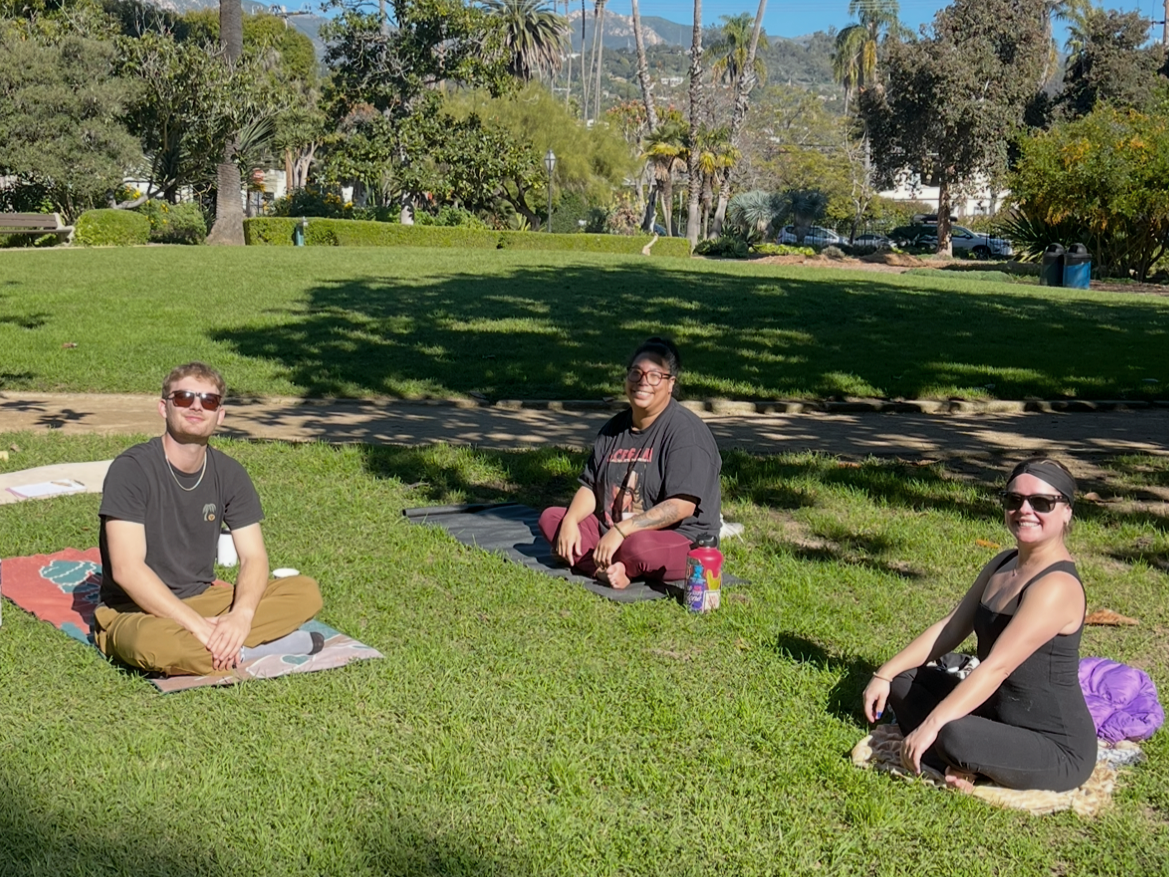
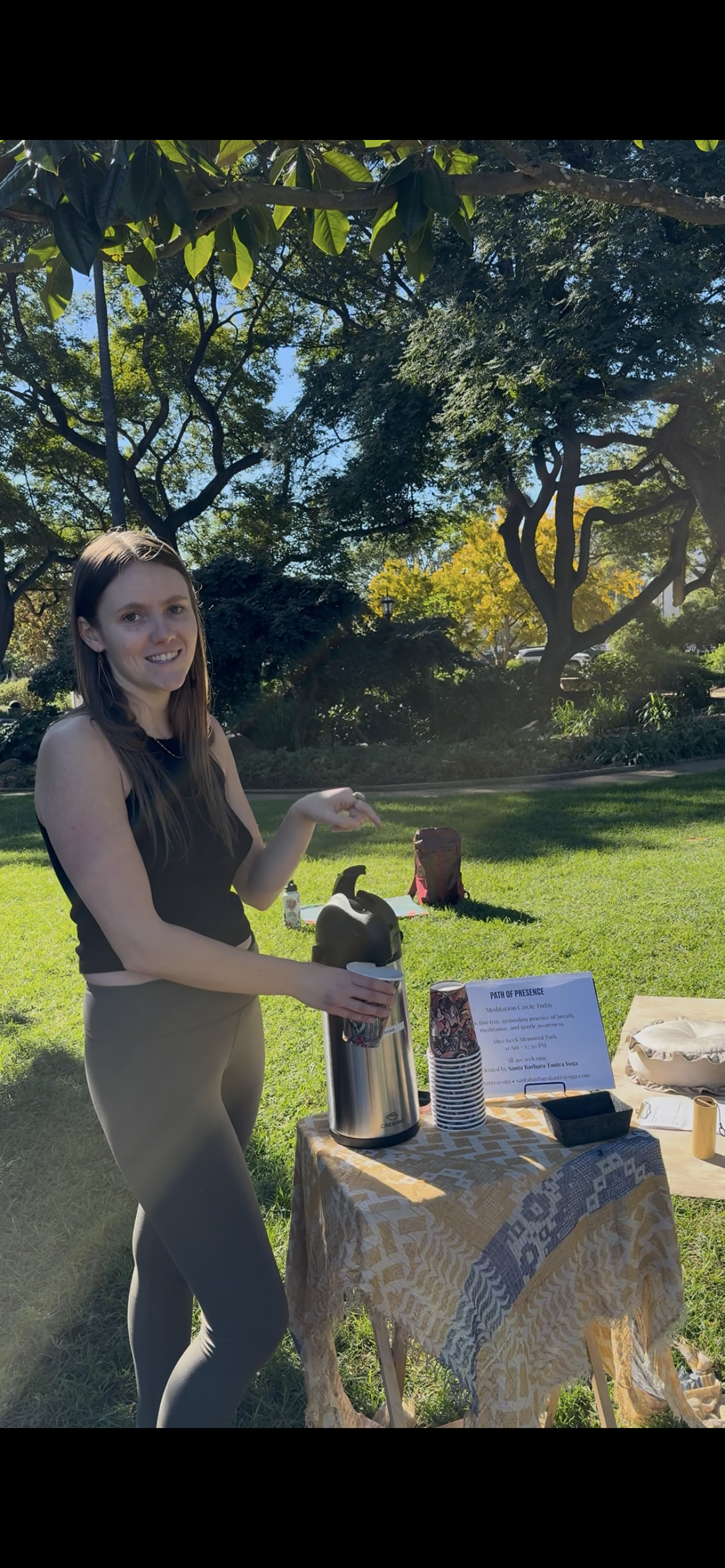
Two gatherings already held in community
The form changes with the setting. The underlying commitments remain: careful preparation, a practice suited to the people present, and enough time for relationship after the instruction ends.
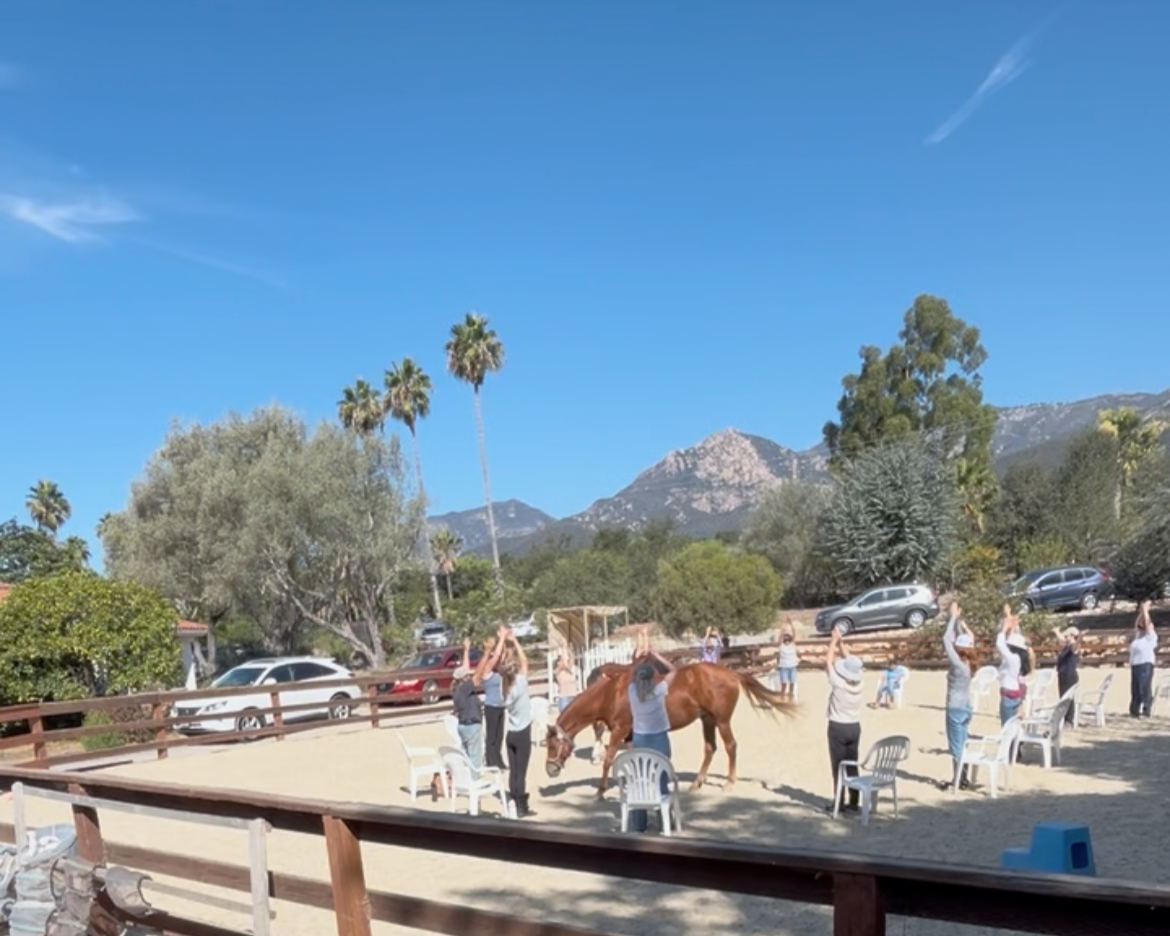

A gathering can support more than one part of a community at once.
The horse event offered participants a contemplative experience while directing material support toward the rescued horses in The Horse Project’s care. Path of Presence created a free public circle with guided meditation, conversation, and tea. Both began with the setting rather than a predetermined program.
Communities this work may serve
The school is especially interested in people whose work involves sustained attention to others, public responsibility, caregiving, or service.
This includes psychotherapists, behavioral therapists, speech-language pathologists, nurses, EMTs, paramedics, firefighters, educators, peer-support workers, caregivers, nonprofit teams, and many other professions that contribute to the life of a community.
Explore the broader range of helping and public-service communities
- Mental and behavioral health
- Healthcare and hospital teams
- Birth, neonatal, and postpartum care
- Hospice and palliative care
- Emergency response and public safety
- Substance-use and peer-recovery communities
- Education and youth services
- Disability-support professionals
- Family and professional caregivers
- Community-health and social-service workers
- Nonprofit staff and volunteers
- Veterinary and animal-rescue workers
- Yoga, meditation, and wellness practitioners
- Interprofessional groups
- Public community groups
Begin a conversation
Tell Julia about the people you want to support.
Share who the gathering would serve, what has prompted the request, and which of the objectives above feel most relevant. You can also note whether your organization has a budget, may need the community rate, or would like help exploring sponsorship.
Submitting an inquiry does not guarantee availability, funding, or a particular format. Each request is considered in relation to the community, setting, scope, accessibility needs, funding, and the current capacity of the school.
Scope
Steady Self School offers contemplative education and practice. Community gatherings are not psychotherapy, medical care, crisis support, clinical supervision, or a substitute for care from a qualified health professional. Julia Dyer is a graduate student in Counseling Psychology and is not a licensed therapist.